Content Day: What It Is and Who It Works For
The term content day appears on almost every production company website, but few explain what actually happens on one. This article describes the sequence, the deliverables, and the limits of the model, including the cases where a content day is the wrong choice.
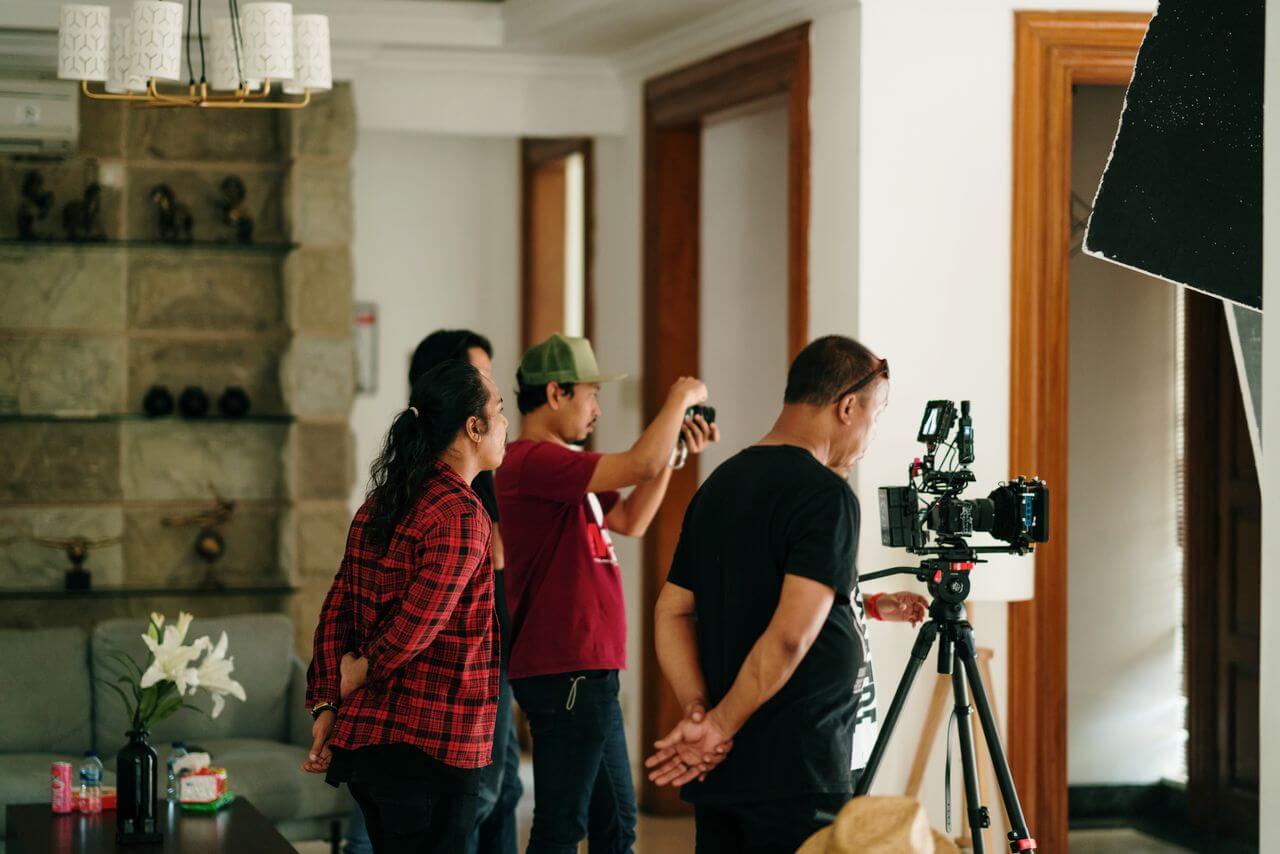
What is a content day?
A content day is a single production day on which the footage for several social media videos is captured instead of just one. At studio XEPHA that is typically four to eight videos, depending on how involved each clip is. They are edited, graded, and mixed afterwards in post-production, not on the shoot day itself.
The economic core of the model: travel, setup, lighting, sound, and pack-down are incurred once. Those fixed costs spread across every video from the day rather than across a single one.
The editorial core: because several videos are planned together, you get a series that can be published over weeks, not one disconnected post.
What a content day produces
Four to eight videos in the main format, usually vertical (9:16) for Reels, TikTok, and YouTube Shorts. They are delivered fully edited after post-production.
Cut variants for other platforms from the same footage, square or horizontal for LinkedIn, for example.
Subtitles and text overlays, because most viewers watch without sound.
Depending on the setup, stills from the same shoot that can be used for feed posts and carousels.
How a content day runs
Before the day: topics, hooks, and rough sequences are agreed and approved. This is the part that decides whether the day succeeds, without a plan you get eight arbitrary videos instead of eight useful ones.
Morning: camera, lighting, and sound setup. Then we shoot the scenes that share the same setup. We shoot by setup, not in video order, that saves the most time.
Afternoon: rebuilding for further setups or locations, remaining scenes, B-roll, and detail shots. B-roll is what later separates a flat edit from a lively one.
After the day: edit, colour grading, music, subtitles, and the per-platform cut variants. Videos are delivered together so they can be published across weeks.
Content day or single production?
A single production makes sense when there is a specific occasion behind it: a product launch, a campaign, one testimonial. There the single result is what counts, not volume.
A content day makes sense when you intend to publish regularly. Once you need more than two videos a month, commissioning individually becomes hard to justify economically.
The rule of thumb: single videos for single occasions, content days for running channels.
Who a content day is not for
Companies without a topic plan. A content day assumes it is clear beforehand what will be talked about. Without that, you get material with no direction.
Companies that need one specific film, an image film or a commercial. Those are different formats with a different production logic.
Channels that do not exist yet, where it is unclear whether social media is even the right channel. In that case the conversation to have first is about strategy, not a shoot day.
How many setups realistically fit in a day
The limiting factor on a content day is not the number of videos, it is the number of setups. A setup means: one location, one lighting situation, one camera position.
Three to four setups is realistic on a full shoot day. Each rebuild costs between thirty and sixty minutes, lighting, sound, camera, test shot.
Within a single setup, on the other hand, you can shoot many videos. Which is why eight videos in one day is easier than four videos in four different places.
The practical consequence for planning: topics that share the same environment should be shot together, regardless of the order they get published in later.
What can go wrong on a content day
No topic plan. By far the most common failure. Without fixed topics you get eight arbitrary videos instead of eight useful ones, and in the edit it becomes obvious that half of them say the same thing.
The wrong people booked. Whoever appears on camera needs to be available for the whole window, not twenty minutes between two meetings. In practice this is the most common bottleneck.
Too many locations. Four locations in one day means four rebuilds and a lot of travel time. Fewer places with more content almost always yields more usable material.
No time budgeted for B-roll. B-roll, detail shots, hands, products, environment, is what makes an edit feel alive. Shoot only talking segments and you get eight talking heads.
Wardrobe forgotten. If every video is shot on the same day in the same outfit, a month of content looks like a single day. One or two changes solves it completely.
No sound check. Bad audio gets skipped faster than bad picture on social media. Sound decides whether someone stays past the first two seconds.
What to prepare for a content day
A list of the topics or questions to be answered. Ten bullet points is enough as a starting point.
The people appearing on camera and the time they have available on the day. In practice this is the most common bottleneck.
Products, rooms, or locations to be shown, and permission to film there.
If you have them: brand guidelines, fonts, and colours for subtitles and text overlays.
We work through these points together in the pre-production call. Get in touch: [email protected]
Ready to start?
Tell us about your project. We'll get back to you within 24 hours.