Kickstarter Video Production: The Complete Guide for Founders — Script, Structure, Cost & What Actually Funds
Kickstarter campaigns with a video raise an average of 85% more funding than those without. That is not marketing copy — that is data from the platform itself. But the video has to work. A weak campaign film does not just underperform; it actively destroys credibility. This is the complete guide to Kickstarter video production: what makes one succeed, how to write the script, what the structure should look like, and what professional production actually costs.
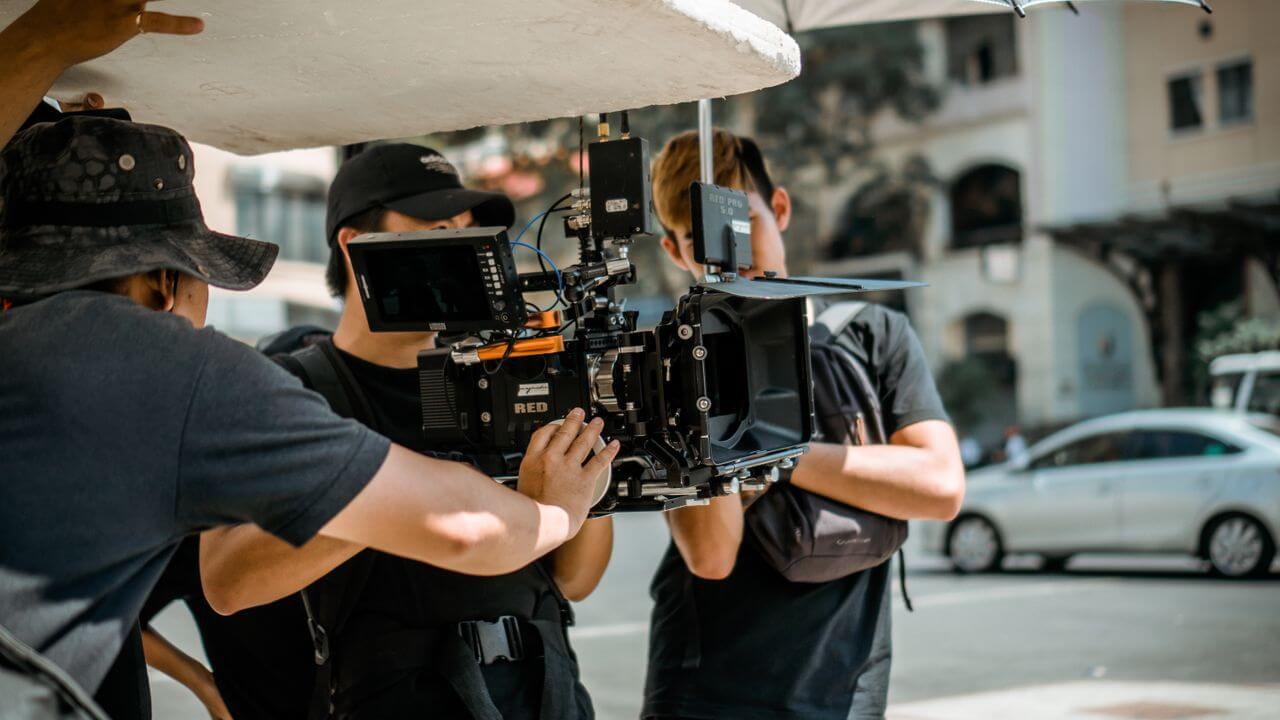
Why your Kickstarter video is your campaign's most important asset
Most visitors to a Kickstarter project page spend less than 30 seconds there before deciding whether to stay or leave. The video is the only asset capable of holding them. Text gets skimmed. Images get scrolled past. A well-made campaign video earns attention, builds trust, and converts strangers into backers — in under three minutes.
The video also sets the tone for everything else on your page. If it looks and sounds professional, backers infer that your product and your team are professional too. If it looks rushed or low-quality, that inference goes the other way — regardless of how good the product actually is.
This is why Kickstarter video production deserves serious investment. Not because a more expensive video automatically funds, but because a poorly made one will cost you far more in lost backers than it saved in production.
How long should a Kickstarter campaign video be?
The optimal length for a Kickstarter campaign video is 2 to 3 minutes. This is the window that gives you enough time to communicate the problem, demonstrate the solution, build credibility, and deliver a clear call to action — without losing viewer attention.
Videos under 90 seconds tend to leave key questions unanswered. Backers want to understand how the product works, who made it, and why the team can deliver. You cannot cover that in a minute.
Videos over four minutes lose most viewers before the call to action. Data consistently shows that viewer drop-off accelerates sharply after the two-minute mark. If your story genuinely requires more time, consider a 2.5-minute campaign video supplemented by separate product demo clips on the page.
The sweet spot for hardware, consumer product, and creative campaigns: 2 minutes 15 seconds to 2 minutes 45 seconds. Enough to be comprehensive. Short enough to hold attention through to the end.
The proven Kickstarter video script structure
Successful Kickstarter videos follow a consistent narrative structure. It is not a template to copy mechanically — it is a persuasion logic that mirrors how backers actually make decisions. Here is how it breaks down.
Seconds 0–30: the hook and problem. Do not open with your logo or your company name. Open with the problem. Show it — do not just describe it. Make the viewer feel the problem before you offer the solution. The goal is to create immediate recognition: "Yes, I know exactly what that feels like."
Seconds 30–105: the solution and demonstration. Introduce your product as the answer to the problem you just established. Show it working. Demonstrate it on camera with real people in real situations. This is where most campaign videos spend too little time. Backers want to see the product in action — not just hear claims about it.
Seconds 105–150: team and credibility. Who built this? Why are you the right people to bring this to market? Show the founders on camera. Show the workshop, the prototype process, the team. Backers invest in people as much as products. This section builds the trust that converts interest into a pledge.
Seconds 150–180: call to action and urgency. Be explicit about what you want the viewer to do. "Back us now on Kickstarter." State the campaign timeline. Create genuine urgency — not artificial scarcity, but real deadline awareness. End with energy, not a slow fade.
The first 15 seconds decide everything
If there is one thing to optimise above everything else in your Kickstarter campaign video, it is the opening. Most viewers make their stay-or-leave decision within the first 15 seconds. Everything that follows only matters if you earn those first 15.
The strongest openings we have seen across successful campaigns: a problem the viewer immediately recognises; a visually striking product moment; an honest, direct address from the founder that establishes authenticity; or a bold, unambiguous statement of what the product does.
What does not work as an opening: logos, music stings, ambient shots of your city, or any preamble before the substance starts. Every second before the viewer understands why this matters to them is a second you might lose them.
How to write a Kickstarter video script
The script is the foundation of the campaign video. Everything else — direction, cinematography, post-production — serves the script. A great script with average production outperforms average script with great production every time.
Start by answering these five questions in writing before you draft a single line of script: What problem does your product solve, in one sentence? Who experiences this problem most acutely? How does your product solve it differently from existing alternatives? Why are you and your team the right people to build this? What do you need backers to do, and by when?
Once you can answer all five clearly and concisely, you have the backbone of your script. Structure the answers in the order above — problem, audience, solution, team, call to action — and you have a narrative arc that follows the natural logic of how backers evaluate a campaign.
Write for speaking, not for reading. Read every line aloud. If it sounds stilted or formal when spoken, rewrite it. The founder should sound like themselves on camera, not like they are reciting a press release.
Keep each paragraph to one idea. Backers process video differently from text — they cannot re-read. Every sentence needs to land on its own.
Common mistakes that sink Kickstarter campaign videos
Too much talking, too little showing. Founders love their product and could describe it for hours. Backers want to see it. Every claim you make verbally should be shown visually. If you say the product is durable, show it being stressed. If you say it is compact, show it in a pocket.
Bad audio. Poor audio is the fastest way to make a campaign video feel untrustworthy. Background noise, room echo, inconsistent levels — these do not just sound bad; they signal that the team did not care enough to get the basics right. Invest in a decent microphone before anything else.
No clear value proposition. If you cannot state the unique advantage of your product in one sentence, neither can your video. The most common cause of an unfocused campaign video is an unfocused product pitch. Do the work on the positioning before you start scripting.
Starting too late. Six to eight weeks before launch is the minimum lead time for a professional Kickstarter campaign video production. Less than that means rushing the script, rushing pre-production, and compressing post-production — and the result reflects it.
Over-explaining the technology. Backers care about what your product does for them, not how it works internally. Every sentence spent explaining the mechanism is a sentence not spent showing the benefit. Lead with the outcome.
Kickstarter video production cost: what to expect in 2026
Professional Kickstarter campaign video production covers an enormous range, from minimal productions to premium cinematic campaigns. That range reflects real differences in crew size, shooting days, post-production scope, and motion graphics complexity.
studio XEPHA quotes every crowdfunding campaign video individually, once the scope is clear. Our AI-assisted production workflow — integrating generative AI for pre-visualisation and motion graphics — delivers cinematic quality at up to 30% below comparable Berlin agencies. The camera work, direction, and creative strategy are fully human-led; AI accelerates production overhead, not creative decisions.
What is included at studio XEPHA: campaign strategy and messaging, script development and story structure, founder on-camera coaching, product demonstration filming, motion graphics and infographic elements, subtitles and localisation, cut-downs for Instagram, TikTok, and LinkedIn. You receive a transparent itemised quote before any commitment.
The correct question is not "what is the cheapest Kickstarter video I can make?" but "what is the minimum investment that gives my campaign a real chance?" A campaign with an ambitious funding target and a bargain-basement video is not being economical — it is undermining the entire effort.
Kickstarter vs. Indiegogo: does your video strategy change?
The video production approach for Kickstarter and Indiegogo campaigns is largely identical — both platforms are video-first, and both audiences make backing decisions in under three minutes. The structural differences are mostly at the platform level: Kickstarter is all-or-nothing funding, Indiegogo offers flexible funding.
This funding model difference does affect the urgency framing in your video's call to action. On Kickstarter, the all-or-nothing mechanic is a genuine reason to back early — if the campaign does not fund, no one gets charged and the project does not happen. This creates real urgency that your video should reference explicitly.
On Indiegogo, the flexible funding option means the project proceeds regardless. Your call to action should still convey urgency, but the framing shifts toward early-backer benefits and reward tiers rather than campaign success risk.
What the most successful Kickstarter campaign videos have in common
We have studied dozens of campaigns that significantly exceeded their funding goals — from Pebble (the watch that defined smartwatches) to Flow Hive (beekeeping redefined) to Exploding Kittens (card game, $8.7m raised). The patterns are consistent.
They all show real people. Not actors, not stock footage — the actual founders and real users of the product. Authenticity reads on camera, and backers can tell the difference between a polished performance and a genuine human being who believes in what they built.
They have a clear, single message. Not five features, not ten benefits — one clear answer to "why does this exist?" Everything else in the video supports that message.
They make backing feel like joining something. The best crowdfunding videos are not sales pitches — they are invitations. They make the viewer feel like they would be part of something meaningful by backing. That emotional shift, from consumer to supporter, is what drives conversion at scale.
studio XEPHA has produced Kickstarter and crowdfunding campaign videos for Mapuguaquen, Cyctron, Pup Cuisine, and Lock8. If you are planning a campaign, contact us at least 6–8 weeks before your launch date.
Ready to start?
Tell us about your project. We'll get back to you within 24 hours.